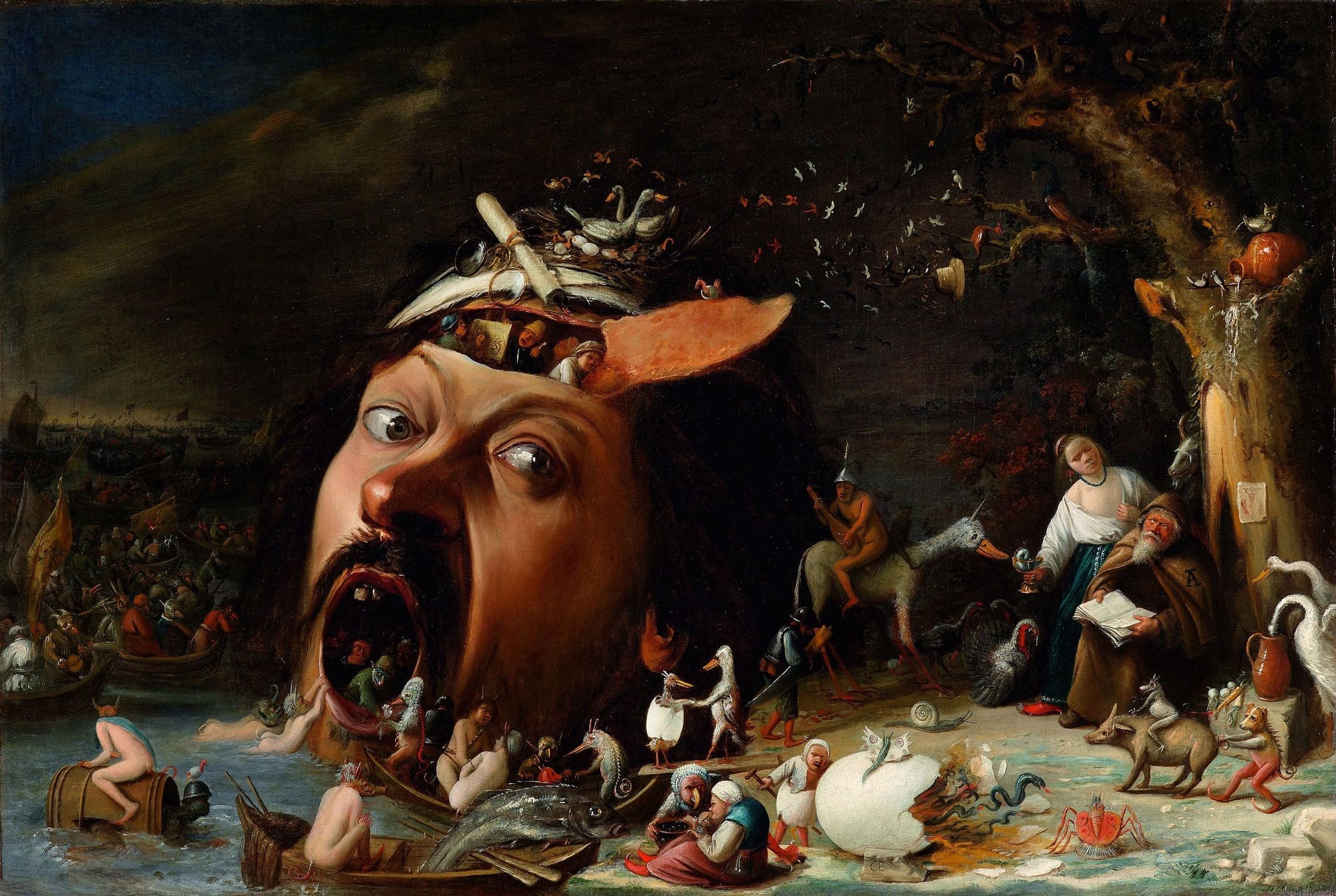

I wake up above the noise theater, toes on firm footing, the wind pushing like it has somewhere to be.
Down there, everything is loud. Sirens, screens, certainty and doubt. Down there, red candles trigger a witch hunt.
Everyone already knows what happened. Everyone already knows who to blame.
Up here, it gets quiet enough to hear the truth.
What changes when you stop taking cues from the timeline and start reading the rules?
What breaks usually sits upstream of consensus. The real stress points are custody, leverage, and incentives.
I do not understand what Bitcoin has done wrong?
That line usually starts looping to the uninitiated when the chart goes red, and the crowd starts looking for a villain.
Every cycle, same song, different cast, even louder confusion relative to price.
Price drops and people put Bitcoin itself on trial. But this is not a protocol confession. Nope this is a market structure confession.
No emergency committee is rushing trying to “fix” bitcoin monetary policy.
No bailout from the Treasury.
No central hand touching issuance.
What failed is the theater wrapped around it.
I do not understand what paper Bitcoin is?
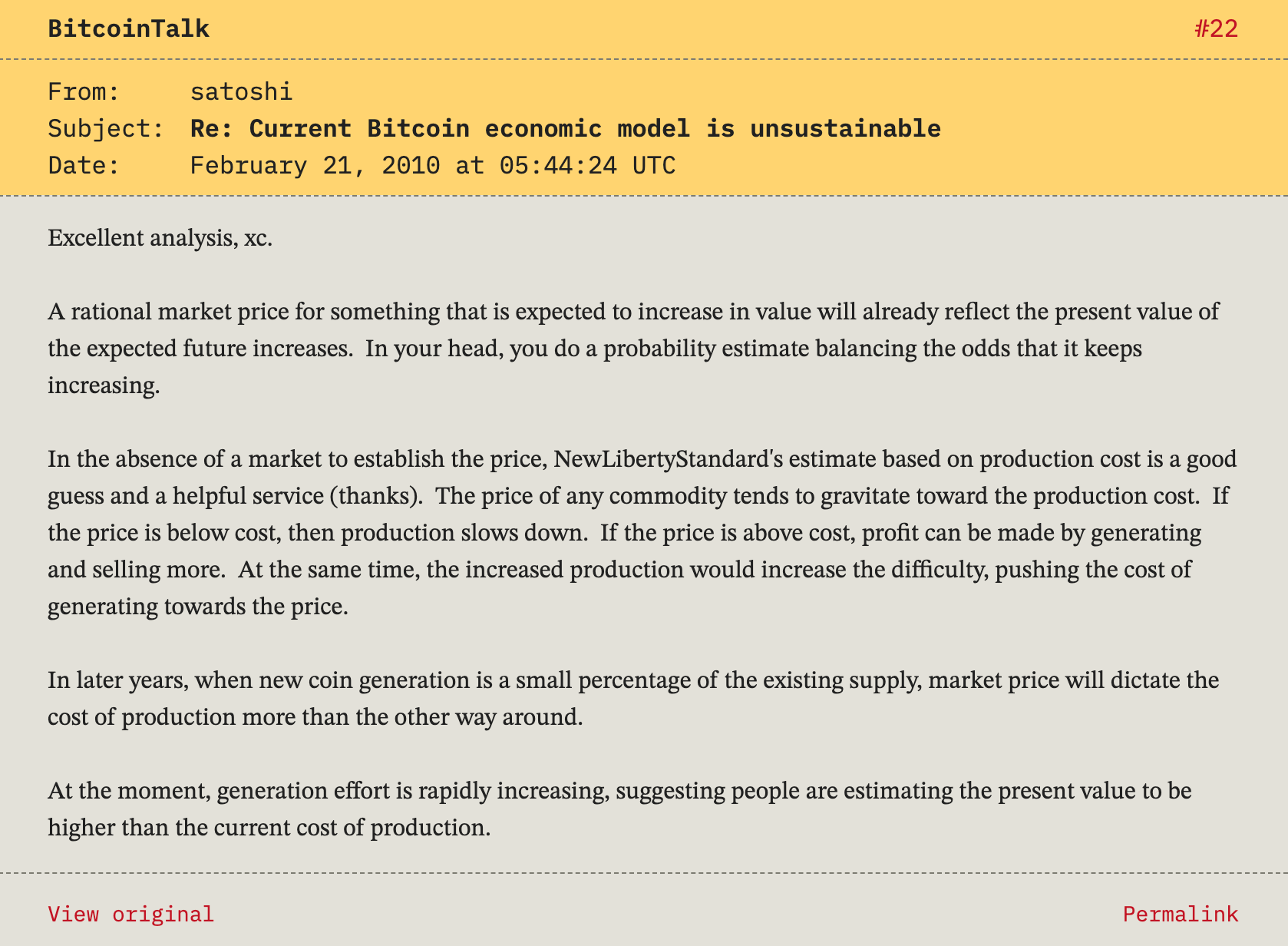
Satoshi’s 2010 reply was not a culture essay. It was mechanism first.
Expected value gets priced in. Production responds to price. Issuance dynamics evolve over time. Different language, same spine. Defend constraints. Let markets discover truth. Do not swap protocol rules for narrative comfort.
Back then, people debated Bitcoin like it was only an economics worksheet. Deflation, velocity, hoarding, equilibrium. Life was simple. Clean models, clean language. Hard money.
But the deeper fight was always stranger than that. It was a fight over whether a living monetary organism could keep its backbone once the world asked it to become safe, smooth, and legible to the very systems it was built to challenge.
The loudest critics were not wrong about pain. Bitcoin has been volatile, inconvenient, and unforgiving at times. But pain is not proof of failure. Pain is often the receipt for refusing cosmetic consensus.
What mattered most is that Bitcoin did not surrender its core constraints to earn elite approval. It did not become a managed replica of the thing it replaced.
So, where did the confusion migrate?
Not into consensus rules. Into "access layers."
That is why the same question keeps showing up in new clothes. Synthetic claims wear the same cloak as bearer ownership. Derivatives on derivatives all the way down. Leverage pretending to be adoption.
Think of it as IOU's dressed up like sovereignty. You do not need to capture Bitcoin to damage confidence in Bitcoin.
You only need to build enough layers between people and private keys, then call those layers “access.” Ordinary people pay for that confusion first. They buy what looks like exposure. It is not. They hold what behaves like a promise. Then stress hits, liquidity vanishes, and everyone rediscovers the difference between asset and counterparty.
That is not a protocol failure. That is a framing failure. No keys. No clear claim. No clean map of who owes what to whom. Then the noise machine amplifies external risks and sells panic as certainty.
Next question.
I do not understand what quantum risk is to Bitcoin?
Quantum risk is real as a long horizon engineering problem. Quantum panic is real as a short horizon narrative weapon for VC’s looking to raise capital. Those are different statements, and people keep forcing them into one headline.
Same playbook every time. Take a technical topic with nuance. Flatten it into fear. Use it to explain away any move you were already positioned for.
That is narrative extraction, not protocol analysis.
Meanwhile, the base layer keeps time. Tick tock, next block. Nodes still verify. Yes. Finality is still final. Yes. Builders are still building on the hardest money humans have ever produced.
Take quantum seriously, yes.
But bitcoin developers handle it with engineering discipline, not engagement farming.
Next question.
I do not understand what the latest scandal around Epstein has to do with Bitcoin?
At the protocol layer, almost nothing. The same goes for what I call "scandal gravity."
Scandal gravity is when a human story gets so loud people mistake proximity for causality and association gossip.
People want interpersonal affiliation stories to function as protocol proofs. Human mess does not rewrite consensus rules. Reputational yellow flags is not a key compromise. Too much commentary becomes ad nauseam in service of...
Someone’s book.
Someone’s short.
Someone’s need for attention or engagement.
Next question.
I do not understand why Bitcoin crashed?
Because markets are leverage engines. They are collateral engines. Most of all they become narrative engines. When those three align the wrong way, price can detach violently from protocol reality for a while.
That while can feel like forever when you are inside it. If that is where you are right now, you are not alone. Drawdowns test identity. They expose whether you own Bitcoin or just rented a story about it.
If your thesis was number go up on schedule, this hurts. If your thesis was an uncensorable settlement, self custody, and monetary rules that no one can quietly edit, this clarifies it.
That is the point. That has always been the point. Because this always happens when the Bitcoin signal gets popular.
Bodysnatchers show up.
They borrow the language. They wear the symbols. They package the imitation. They remove the backbone. Then they disappear until the next cycle.
Don't trust. Verify.
Most of all, do not outsource belief. Separate protocol truth from market theater.
Build things that survive without permission.
Bitcoin is not captured. Attention is.
Do not hand yours to the Bodysnatchers.
The root problem with conventional currency is all the trust that's required to make it work. The central bank must be trusted not to debase the currency, but the history of fiat currencies is full of breaches of that trust.
Banks must be trusted to hold our money and transfer it electronically, but they lend it out in waves of credit bubbles with barely a fraction in reserve. - Satoshi